
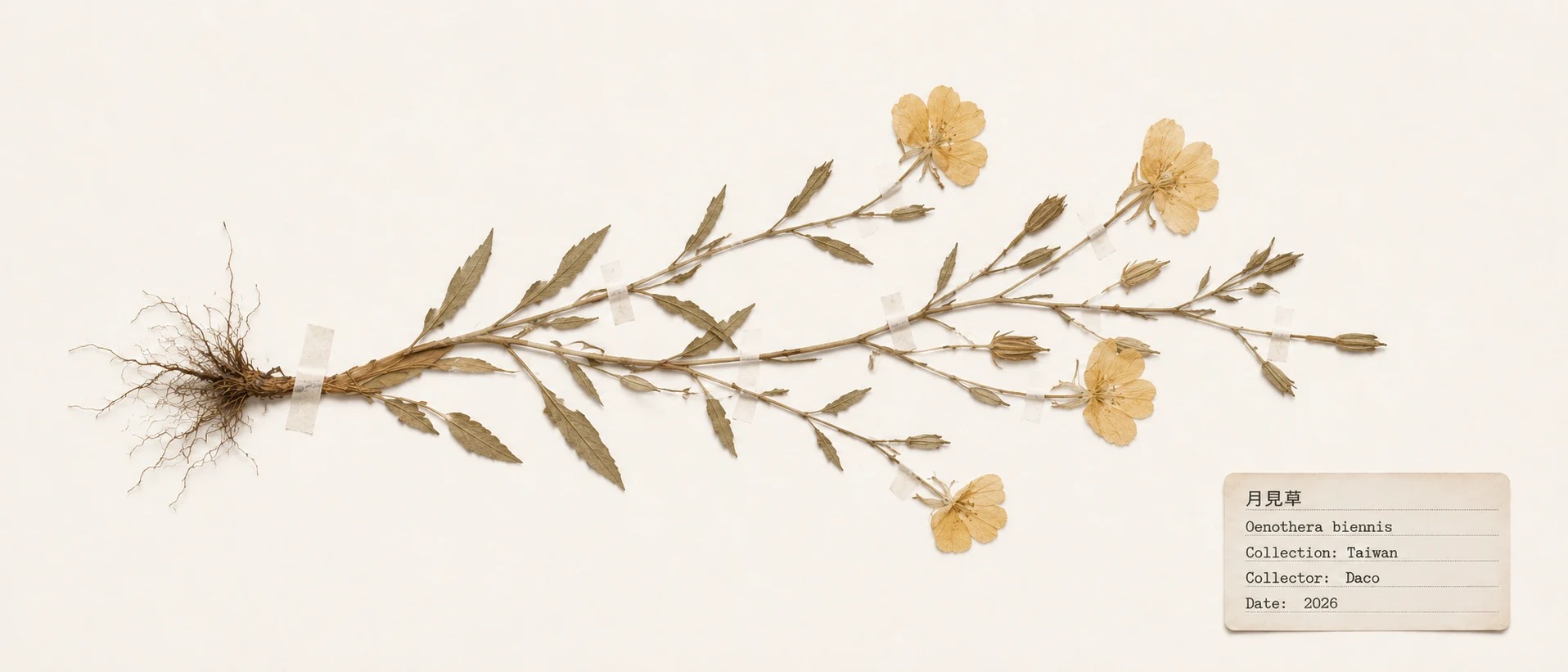
- Specimen
- 影響我思考方式的事物
- Category
- Painting / Sequential Drawing / Object / Personal Practice
- Focus
- Atmosphere / Relation / Time / Memory / Ambiguity
- Field Note
- The part of the museum closest to my roots
- Collector
- Daco
- Role
- Artist / Designer / Product Thinker
What informs my thinking
My design practice is also shaped by art-making, field observation, maps, nature, and everyday experience. These practices train me to notice details, organise clues, and keep exploring before a clear answer emerges. They are more than interests outside work: they form the underlying approach I bring to understanding people, building narratives, and developing product concepts.
What shapes how I think
This chapter is the part of the specimen museum closest to my roots.
Some works do not translate directly into business results, yet they remind me why I still want to keep making things. They preserve how I look at the world, and remind me that design is not only about making things efficient, clear, and executable. It can also leave visible space for feelings that are otherwise hard to name.
Before things are explained clearly, they were once whole.
In work, I often need to turn vague requests, complex information, and incomplete problems into forms that can be understood, discussed, and executed.
I have to help a shop become visible, a health service become understandable, a system become usable, and an idea become an interface. All of that asks me to make things clear: organize context, build hierarchy, define flows, and translate language.
But in my own creative practice, I often do the opposite, and that matters just as much. I do not rush to remove ambiguity. I let it stay a little longer and watch what shape it grows into.
I am interested in feelings that have not yet been fixed by language: waiting, closeness, departure, time, traces, loneliness, encounters, memory, and those hard-to-explain but real moments inside people.
To me, design is not only about clarifying information. It can also find experiential form for subtle, irrational, or difficult-to-measure feelings.
Making the unsayable tangible
One ongoing watercolor series of mine, Long Story, feels like a long dream-map.
It contains floating scraps of paper, bodies, birds, openings, targets, fruit, stars, tubes, and figures swimming toward somewhere. They are not there to explain one clear story or deliver one fixed answer. They feel more like subconscious objects drifting, approaching, crossing, and pulling each other along.
Some things do not become valid only after they are explained.
They can first exist as an atmosphere, a scene, or a feeling that has not yet been named.
I do not want to make these things merely describable. I want to make them concrete while still keeping their original air.
That way of thinking later shaped how I understand products and brands. When I build products like TreeGo, DriftGo, or Poemeet, I am not thinking only about function. I am also thinking about the psychological state each product carries.
TreeGo is not only about checking in at a tree. It is about how people notice nearby life again. DriftGo is not only about drifting paper planes. It is about how strangers briefly intersect in the world. Poemeet is not only about writing poems together. It is about whether people can recognize each other through language and co-creation before seeing each other’s appearance.
The core of these products is never the function alone, but the fragile human moment behind it.
Using simple forms to carry relationship and movement
Another group of works uses a language closer to ink drawing and comic panels.
There are small yellow figures, little cars, trains, platforms, moving feet, and brief encounters inside train carriages. They are simple, even a little childlike, but I love how they never over-explain.
The characters almost never have explicit expressions or dialogue. But distance, direction, pause, nearness, and missed timing are already speaking.
Not much explanation is needed for a relationship to feel present.
This later shaped the way I approached interface and information design.
In my iHealth SEO and health-information work, I was not merely stacking data onto a page. I was thinking about where readers pause, where they get confused, and where they need to be caught. Health information easily becomes stiff, specialized, and distant, so I needed to organize it into a rhythm that people could follow gradually.
In the Tainan Confucius Temple retail-marketing case, I was not only asking how to sell things, but how a place becomes memorable. Walking into a shop, seeing a display, taking an object away, or photographing a moment all carry subtle psychological routes underneath them.
These works keep reminding me that design handles not only information flow, but emotional flow.
Turning abstract concepts into collectible objects
Drawer Watch is a laser-cut object. I made something shaped like a watch, but instead of a watch face it contains a tiny drawer. Inside that drawer, you can place a small note: a to-do item, a shopping list, or any moment you want to store for a while.
It has an intentionally anti-tech feeling. When most tools keep urging us to handle time more efficiently, more instantly, and more quickly, I wanted to make something that moved in the opposite direction.
If time is not a number, a notification, or a schedule,
what else could it be?
I have always loved this piece because it does not explain time more clearly. It makes time touchable again. Time can be a note, a small matter stored inside a drawer, an unfinished plan, or the trace of someone once being near you.
This also shaped how I imagine products. I started caring more deeply about whether a feature could carry memory, emotion, and relationship beyond merely finishing a task.
Emolog is one attempt to turn emotion into record. Poemeet suspends appearance and personal conditions so that people can first create together through language. DriftGo turns movement, uncertainty, and encounter into something that can be played, waited for, and discovered. TreeGo turns overlooked urban trees into places a person can approach, pause at, and record.
Will the user feel something small but real in the process?
My work often asks me to make things clear. In the Tainan Confucius Temple case, I needed to clarify the relationship between place, products, and events, so the shop could become a growing marketing field rather than a passive storefront.
At iHealth, I needed to organize health, testing, risk, and SEO content into structures that could be found, read, and understood. In products like Emolog, TreeGo, DriftGo, and Poemeet, I needed to turn ideas into information architecture, user flow, interaction rules, and concrete interface.
All of that needs clarity. But I also know that clarity does not mean freezing everything in place. Good design does not flatten feeling into a slogan or turn everything into a perfectly sortable table. Some things lose their light the moment they are verbalized too quickly.
Let people understand, but still want to come closer.
Let things be executable, but not lose their life.
Let information have structure while emotion keeps moving.
In the age of AI, human value may lie in noticing subtle moments
AI is good at organizing, generating, summarizing, and recombining. It can rapidly produce copy, visuals, structures, and options, and it can help make vague things more efficient.
But the more I use AI, the more I feel that human value is not only about producing more. It may lie in recognizing which moments deserve to be kept, which feelings should not be simplified too quickly, and which tiny experiences actually drive a person to choose.
What truly moves people is not always the most rational argument. Often it is a hard-to-explain image, a moment of being understood, or the feeling that something somehow relates to oneself. These things are hard to quantify, yet they genuinely affect people.
So in my own creative work, I keep practicing how to move closer to those subtle moments. And in concrete projects, I keep trying to convert them into forms that can be used, understood, and remembered.
Not only solving problems,
but also leaving space for human feeling.
Closing
Looking back, I realize I have spent a great deal of time on works that seem difficult to classify: watercolor, comics, laser-cut objects, video, abstract painting, and illustrations that are hard to explain cleanly.
They do not always map directly to a commercial result, and they cannot always be summarized in one sentence. But they have slowly shaped how I see things. They make me believe that behind behavior there is always something deeper than “need”: memory, loneliness, expectation, relation, time, or some very small glimmer.
My job is to build structure where clarity is needed, while preserving that little bit of light where over-simplification would erase something human.